


WATER SUSTAINABILITY ACTION PLAN: Community-of-practice for ‘Convening for Action in British Columbia’ – “Having the waterbucket.ca website as a communication platform allows the Action Plan partners to ‘tell our story’ and ‘record our history’ as a work-in-progress,” stated Ray Fung (2006)
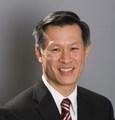
“Convening for Action is a provincial initiative that supports innovation on-the-ground. From the perspective of those leading and/or participating in regional programs, having this community-of-interest provides the opportunity to ‘tell our story’ and ‘record our history’ as a work-in-progress,” states Ray Fung. “It will turn ideas into action by building capacity and understanding regarding integration of long-term, strategic planning and the implementation of physical infrastructure.”
DOWNLOADABLE RESOURCE: The Partnership for Water Sustainability in British Columbia – Our Story (March 2018)
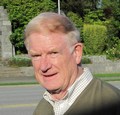
“Future planners, engineers, scientists, politicians and citizens alike will be called upon to demonstrate both vision and pragmatism, working as a team towards consensus, commitment and collaboration for the common good. Such collaboration is essential and must cross all political and community boundaries given that climate change is no respecter of such creations. The Partnership has accepted this challenge and its implementation,” stated Eric Bonham.
Green, Heal and Restore the Earth: Ian McHarg’s “Design with Nature” vision has influenced implementation of British Columbia’s Water Sustainability Action Plan
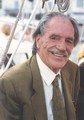
In his 1969 book, Design With Nature, Ian McHarg pioneered the concept of environmental planning. “So, I commend Design with Nature to your sympathetic consideration. The title contains a gradient of meaning. It can be interpreted as simply descriptive of a planning method, deferential to places and peoples, it can invoke the Grand Design, it can emphasize the conjunction with and, finally it can be read as an imperative. DESIGN WITH NATURE!,” wrote Ian McHarg.
DOWNLOAD A COPY OF: “Living Water Smart in British Columbia: Balancing Act – H2O and Healthy Streams” – released by the Partnership for Water Sustainability in April 2024
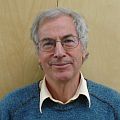
“Students are always looking for projects where they can make a difference. The idea was how can we bring more science into development to make a difference. I have always looked for people who are within the system but want to make a change. They are the leaders. And if we can contribute some science to these leaders, they can make the difference, not us. All we do is provide the data. And so, connecting with Richard Boase in the 1990s was really fundamental because he is on the inside,” stated UBC’s Dr. Hans Schreier.
BRING THE SCIENCE INTO LOCAL GOVERNMENT: “Hans Schreier of UBC ignited my passion in the mid-1990s when the District worked with UBC on applied research. What we learned was transformational. We then turned our minds to the role of green infrastructure in protecting streams from urban impacts,” stated Richard Boase, career environmental champion within local government in the Metro Vancouver region
“The UBC research team led by Hans Schreier and Ken Hall dated all these sediment cores from Burnaby Lake and extracted sediments from certain years. They identified, for example, when lead stopped being used in gasoline. They also showed how pollutants in road runoff work their way through the drainage networks and into streams where they deposit. It was an inspiring moment for me. I saw a path forward for making a difference. That was the moment when I realized why we must do a better job of erosion and sediment control,” stated Richard Boase.
DOWNLOAD A COPY OF: “Living Water Smart in British Columbia: EAP is a financial tool to help streams survive” – released by the Partnership for Water Sustainability in April 2024

“I am the first master’s student involved in EAP, the Ecological Accounting Process. It is interesting because my research is an applied project that has direct implications for local governments. My research looked at ways we could take EAP from a stream-by-stream approach and apply it to a watershed scale or a regional scale. This might be really useful and cost-effective for local governments that have multiple streams in their jurisdiction. In my thesis, I looked at ways to simplify the process for moving EAP to the regional scale and lower the boundaries to entry on different types of projects,” stated Sam Gerrand.
CONVENING FOR ACTION AT THE 2024 BC LAND SUMMIT: “There are many different parts to EAP. With each part comes a pathway with capacity to help local governments,” stated Anna Lawrence, Project Coordinator, Mount Arrowsmith Biosphere Region Research Institute at Vancouver Island University

Local government Asset Management Plans need real financial values in order to include budgets for streams. “Led by Tim Pringle, the Partnership for Water Sustainability created the methodology for EAP, the Ecological Accounting Process. EAP has been passed on to VIU as part of the intergenerational baton. Now we are in a 3-year transition strategy to embed it. As we become more familiar with EAP and its applications, it is becoming increasingly apparent that it requires tailored communication to a variety of audiences,” stated Anna Lawrence.
CONVENING FOR ACTION AT THE 2024 BC LAND SUMMIT: “The phrase attitude change goes to the heart of what the Partnership session will showcase at the Land Summit. With an attitude change, anything is possible,” stated Kim Stephens, Executive Director of the Partnership for Sustainability
“At the BC Land Summit, the Partnership will deliver two 90-minute interactive sessions under the banner Going Beyond Just Doing Enough. In the first session, Richard Boase and Paul Chapman explain what the Blue Ecology vision for an attitude change looks like through the local government and stewardship sector lenses. In the second session, a team led by Tim Pringle presents the methodology and metrics for tackling the Riparian Deficit. Because local government Asset Management Plans need real financial values, EAP fills a gap,” stated Kim Stephens.
GREEN INFRASTRUCTURE JOURNEY IN THE CITY OF DELTA: “Before, emphasis was on THE WHY. Now we are getting better at THE HOW,” stated Harvy Singh Takhar, Utilities Engineer with the City of Delta in Metro Vancouver

“We have done a lot of back and forth on road designs. The streetscape enhancement ideology is being implemented at the forefront rather than through a review of utilities to see whether there any drainage concerns. The road designers are taking the initiative to incorporate curb cuts and even linear rain gardens. Their understanding of the need has evolved through internal collaboration. By working with the roads people on curb cuts, we have actually come up with variations. Our original detail was quite generic. Now we are able to implement it in various types of curb designs,” stated Harvy Takhar.
DOWNLOAD A COPY OF: “Living Water Smart in British Columbia: Delta’s rain garden program for streetscape revitalization” – released by the Partnership for Water Sustainability in April 2024

“Historically, drainage has been an afterthought in urban planning decisions. Neighbourhoods were developed without thinking about drainage in a broader watershed context. Circa 2000, however, the emphasis became let’s look at this on a watershed basis. For municipalities like Delta with well-developed infrastructure, this meant figuring out HOW to retrofit and redesign drainage systems. Road rights-of-way account for one-third of the land area of a typical urban watershed, Commitment to a rain garden program would make a material difference over time,” stated Hugh Fraser.
CONVENING FOR ACTION AT THE 2024 BC LAND SUMMIT: “Streams need a place to be. If we cannot get our heads around that, we are not going to keep our streams,” stated Tim Pringle, a founding director and Past-President of the Partnership for Water Sustainability
“Because nature is a system, you cannot slice and dice it. EAP recognizes this and is a financial tool to give streams the support they need to survive. EAP provides a value picture of a stream system as a land use. How are Blue Ecology and EAP interconnected? Blue Ecology emphasizes the social perspective for protecting watersheds and streams. EAP shows how to achieve that outcome. EAP builds on the ‘big idea’ that use and conservation of land are equal values. Where Blue Ecology and EAP come together is in recognizing the importance of water and ecological assets in those two contexts,” stated Tim Pringle.
CONVENING FOR ACTION AT THE 2024 BC LAND SUMMIT: “EAP, the Ecological Accounting Process, is an expression of Blue Ecology. Both are all about a restorative framework and mindset,” stated Richard Boase, career environmental champion within local government
“We must do a better job of protecting streams. I am in a position now to reflect on this because I believe I have earned that right over the course of a 30-year career. Given how much I have seen, done and been exposed to in my local government career, it is fair for me to reflect on what has happened and comment on why local governments have not been as successful as we would have wanted. But we must focus on the path forward so that we protect or enhance stream systems in the built environment,” stated Richard Boase.
CONVENING FOR ACTION IN BRITISH COLUMBIA: “The ecosystem-based approach is needed more than ever to adapt to weather extremes,” stated Susan Haid, career environmental and urban planner in BC local government, and adjunct assistant professor at the University of BC

“In many ways, what I am teaching comes back to the same kind of framework around ecosystem-based planning which Erik Karlsen and others were advancing in the 1990s, and which is synonymous with watershed-based planning,” stated Susan Haid. “Titled Policy for a Sustainable Region, it is big picture and is about policy frameworks to influence urban design. A lot of it is case studies and reflection. But I also bring in resiliency and ecological frameworks, with lectures on what are the best practices going forward. I call these sessions SHARPENING THE EDGE.”