

ROUNDHOUSE RADIO: “The past year ranks with 2003 as a defining ‘teachable year’ for a paradigm-shift” (interview in January 2016)
Note to Reader:
Roundhouse Radio (CIRH-FM 98.3 FM) was an independent “urban talk” radio station in Vancouver, British Columbia. It broadcasted from the Railtown neighborhood starting on October 15, 2015, but permanently went off the air on May 6, 2018, due to financial difficulties.


2015 ranks with 2003 as a defining ‘teachable year’ for a paradigm-shift
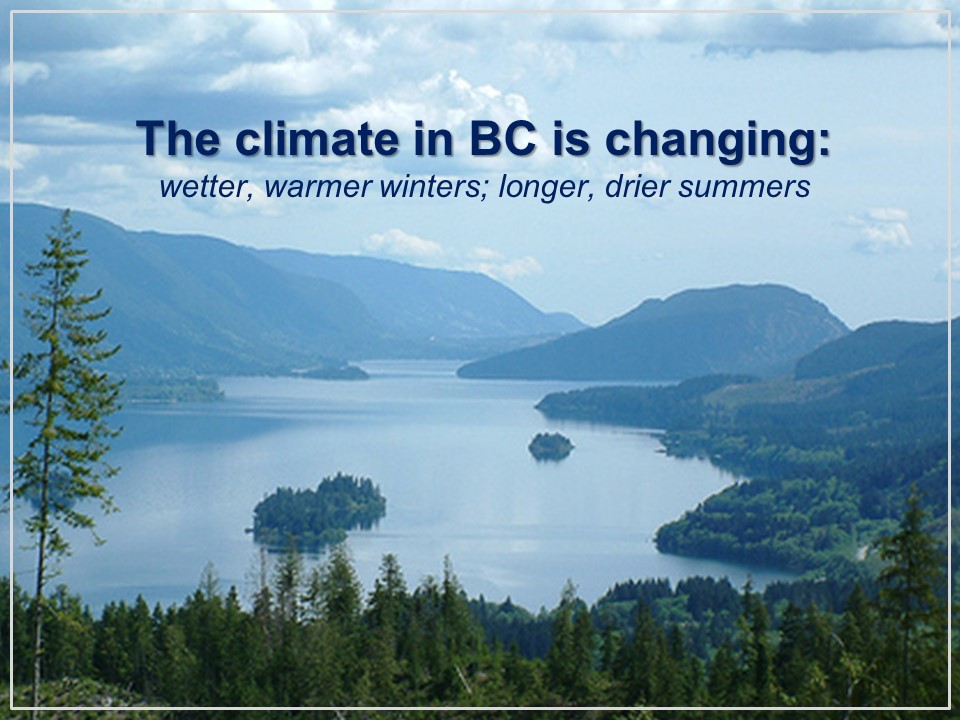
For British Columbians, 2015 was the year of the great drought, dwindling snow packs, melting glaciers, beleaguered salmon runs and a costly forest fire season, followed by windstorms and heavy rains. Launched from a powerful El Nino, storms caused the single largest electrical outage in the province’s history. The 2015 Drought was selected as the Top Story of 2015 in a poll conducted by the CBC.
The drought that extended from Vancouver Island to Manitoba and from Mexico to the Yukon suggests that Western North America may be crossing an invisible threshold into a different hydro-meteorological regime.


Which Approach is More Effective: Prescribe Outcomes or Encourage Shared Responsibility?
Kirk Lapointe invited Kim Stephens back to his radio show on January 7, 2016 to talk about the 2015 drought. In the course of the conversation about the impact of the drought on the public consciousness he asked:
“What would be your prescription for a city like Vancouver where the land use is relatively diverse; and where there is not a lot of agricultural land inside the city. Yet users are very demanding on the system, and there are individuals who perhaps do not act as a community at times. What would be your prescription for a big place like this?”
“If is funny that you would use the word prescription,” replied Kim Stephens. “In British Columbia we don’t prescribe. We encourage shared responsibility. Prescribing just doesn’t seem to work. We seem to have to get to a critical mass where people realize that we have to do something.”
“Didn’t we get there last year?” interjected Kirk LaPointe.
Implement Changes in Practice Under the Umbrella of the Water Sustainability Act
“You would hope so,” replied Kim Stephens. “If I look back in context, the last ‘teachable year’ was 2003. That set in motion a process that culminated with a number of outcomes, in particular adoption in 2014 of the Water Sustainability Act. The key now will be how we take the 2015 teachable year and leverage the window of opportunity it has provided to implement a range of actions in the Water Sustainability Act, including regulations.”
This statement led Kirk LaPointe to ask: “So, what are your ‘encouragements’?”
Decisions Ripple Through Time
“It does start with the understanding and the ‘water ethic’ of those who are in the front-lines on a daily basis and are making decisions in local government,” responded Kim Stephens. “Those actions that get approved on a daily basis will either have cumulative benefits or impacts, one property at a time.”
“So, the biggest thing that we can accomplish in the short-term is educating enough people to reach a critical mass where enough people understand that each site is part of a watershed, and that what each of us does has consequences, or better still, benefits. Our actions today ripple through time.”
“We are in transition now. We have made progress in changing the nature of thinking at a watershed scale. Now the focus is on how we implement changes, which include performance targets for protecting watershed health, at the site scale. A desired outcome in managing water at the site scale is that we will achieve those big picture goals (that have been identified through the Water Sustainability Act process),” concluded Kim Stephens.

To Learn More:

